






Seventeen researchers will receive a total of over PLN 26.5 million to carry out research projects in Poland. The new awardees will join researchers who, with the support of the Polish Returns NAWA Programme, are establishing research teams, developing new areas of research and building international cooperation in Poland.

The Polish Returns NAWA Programme enables researchers who have developed their careers abroad to return to Poland and conduct research at Polish higher education institutions, scientific institutes and research institutes. Awardees can establish their own project teams and apply the knowledge, experience and professional networks they have gained within the international research community.
NAWA received 69 applications in this year’s call, more than in the previous edition.
Seventeen projects with a total value of PLN 26,571,070 were selected for funding.
Due to the exceptionally high academic quality of the applications, the Director of NAWA decided to increase the number of funded projects compared with the original assumptions of the call.

– The Polish Returns Programme offers outstanding researchers who have gained experience at the world’s leading research institutions a real opportunity to return to Poland. Each returning researcher brings not only an impressive academic record, but also new experience, international networks and a different perspective on conducting research. The results of the latest edition confirm that ambitious, world-class projects can be pursued in Poland. I am confident that the entire research community will benefit from these returns, that they will provide an impetus for further development and strengthen Poland’s international position – says Dr Wojciech Karczewski, Director of the Polish National Agency for Academic Exchange.
Experience gained at leading international institutions
This year’s awardees have worked at leading research institutions across Europe, North America and Asia, including in the United States, Germany, France, Switzerland and China.
Their previous places of employment include the European Molecular Biology Laboratory (EMBL) in Grenoble, the US National Institutes of Health (NIH), the Max Planck Institute for Astrophysics and the University of Chicago.
The awardees represent a wide range of academic disciplines and will lead research teams at institutions across Poland.
Their projects will be carried out at institutions including the University of Warsaw, Jagiellonian University, Adam Mickiewicz University in Poznań, the University of Gdańsk, Nicolaus Copernicus University in Toruń, SWPS University, AGH University of Krakow and institutes of the Polish Academy of Sciences.

Professor Wojciech Galej returns to Poland
One of this year’s awardees is Professor Wojciech Galej, a world-class structural biologist and recipient of a prestigious ERC Consolidator Grant. After many years of working abroad, he will join the International Institute of Molecular and Cell Biology in Warsaw (IIMCB).
– I decided to return to Poland because I believe that the country has enormous potential for development and innovation, while the International Institute of Molecular and Cell Biology is one of the leading research institutes in Poland and this part of Europe. I hope that my return will strengthen Poland’s research capacity and enable the introduction of new, advanced structural biology methods – says Professor Wojciech Galej.
– From a personal perspective, I am very pleased by the prospect of returning to Poland and once again working more closely with the Polish research community. I hope this will provide an impetus for new research projects and long-term scientific collaborations – he adds.
Professor Galej’s return will support the development of unique research methods in Poland, including cryogenic electron tomography. This technique makes it possible to visualise cells at single-molecule resolution, bridging the gap between cellular and molecular biology.
– Wojciech Galej’s arrival will significantly strengthen our institute’s research capacity. He brings not only an outstanding academic record and experience in conducting groundbreaking research at the highest international level, including research supported by an ERC Consolidator Grant, but also expertise in the pioneering method of cryogenic electron tomography. We are the first centre in Poland to have the necessary equipment and to implement this method – says Professor Marcin Nowotny, Deputy Director for Scientific Affairs at the IIMCB.
The impact of previous returns
The experiences of participants in previous editions show that participation in the programme can mark the beginning of further research development, the establishment of research teams, the securing of additional grants and the development of international cooperation based in Poland.

Małgorzata Włodarczyk-Biegun, DSc Eng., developed research into 3D bioprinting at the Silesian University of Technology. This technology is used, among other applications, to create tissue models and design advanced implants. With support from the Polish Returns Programme, she established her own research group and a 3D bioprinting laboratory. The next milestone in her career was securing a grant from the European Research Council.
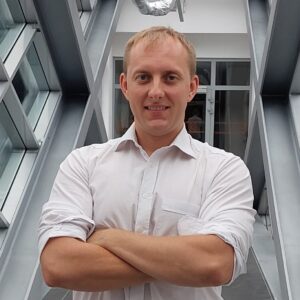
Dr Marek Szczepańczyk, co-author of a publication on the first direct detection of gravitational waves, is advancing research in this field at the University of Warsaw. His work strengthens the participation of Polish teams in international research on gravitational waves, supernovae and the most violent phenomena occurring in the Universe.

Professor Łukasz Bratasz leads a research group dedicated to cultural heritage preservation at the Institute of Catalysis and Surface Chemistry of the Polish Academy of Sciences. The team uses scientific methods to assess threats to historic objects and museum collections and develops tools that support the institutions responsible for their protection.
These are just a few stories of participants in previous editions of the programme. The benefits of a researcher’s return can extend far beyond the completion of a single project. They include the development of new laboratories and research methods, the establishment of research teams, the securing of additional grants and the integration of Polish institutions into international cooperation networks.
Comprehensive support for researchers
The Polish Returns NAWA Programme is implemented in cooperation with the National Science Centre and the National Centre for Research and Development. This enables awardees to receive comprehensive support, including funding for the salaries of the project leader and project team members, as well as a start-up grant covering the direct costs of research and equipment.
Since the programme was launched in 2018, funding has been awarded to a total of 109 researchers. Their return has contributed to the emergence of a group of research leaders at Polish universities and institutes who bring cutting-edge knowledge, international networks and proven research team management practices to the Polish academic community.
The list of projects selected for funding is available in the “Call results” section.
NAWA plans to launch the next edition of the Polish Returns Programme in autumn 2026.